In this guide
Short answer: a vertical baler is the right machine for the large majority of businesses that generate cardboard, and a horizontal baler is the right machine once baling becomes a full-time job. The line between them is drawn by volume, labor, floor space, and what you want to do with the bales.
Norton Equipment has sold, installed, and serviced both kinds across the Mid-South since 1997, and the question comes up on the phone every week. This guide covers the real differences, the volume thresholds we use to size machines, what each one costs, and how to decide.
What is the difference between a vertical baler and a horizontal baler?
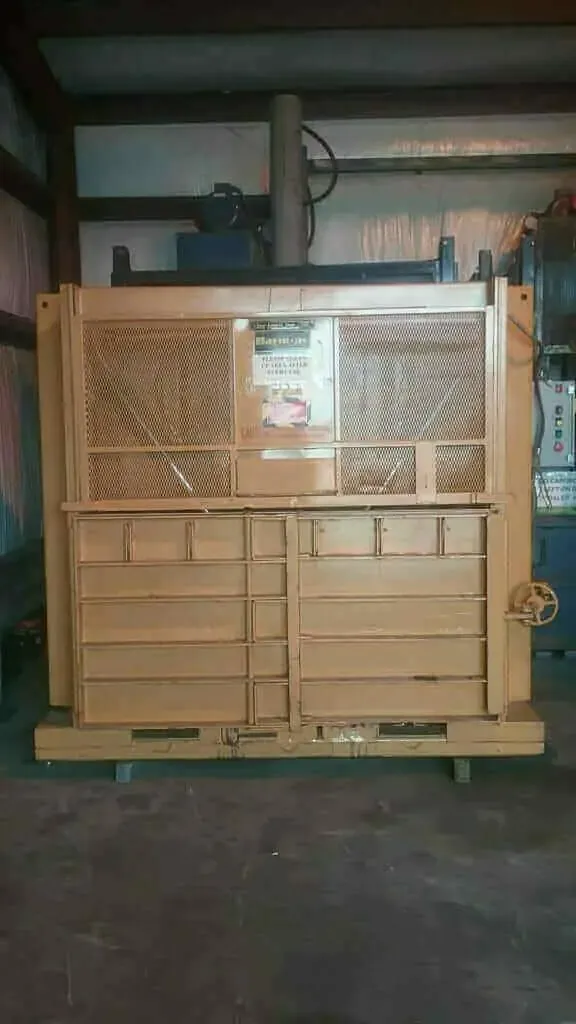
A vertical baler, sometimes called a downstroke baler, compresses material with a ram that travels down from the top of the chamber. An operator loads cardboard through the front door, cycles the ram a few times as the chamber fills, then ties the finished bale off with wire and ejects it. One person runs it in a few minutes a day.
A horizontal baler compresses material with a ram that travels sideways through a long chamber. Material feeds into an open hopper from above, by hand, conveyor, or air system, the ram cycles automatically, and finished bales push out the end tied and ready to stack. Closed-door manual-tie horizontals suit growing operations; full auto-tie machines run continuously with almost no operator time.
Vertical balers: who they fit
A vertical baler is the most common recycling machine in America because it fits where cardboard is actually generated. It occupies roughly the footprint of a doorway, most sizes run on ordinary 208/230V single-phase commercial power, and installation is typically a half day: set, anchor, wire, test, and train.
- Volume: anywhere from a few bales a week up to roughly 15 tons of cardboard a month.
- Bale size: from small 42-inch machines making bales of a few hundred pounds, to 60-inch machines making 600 to 1,000 pound bales, to wide-body 72-inch high-density units producing mill-size bales of 1,000 pounds or more.
- Labor: one operator, loading and tying by hand, a few minutes per cycle.
- Typical sites: grocery and retail back rooms, restaurants, distribution centers with moderate cardboard, warehouses, hotels, schools, and manufacturers with a single packaging stream.
- Cost: new vertical balers generally run about $6,000 to $20,000 depending on size and features. Refurbished verticals from our shop cost roughly half of new.
Horizontal balers: who they fit
When someone is standing at the baler all shift instead of a few minutes a day, a horizontal baler changes the operation. The open hopper accepts material continuously, the ram runs on its own, and the bales come out dense, uniform, and mill-ready.
- Volume: a common threshold is roughly 15 to 20 tons of cardboard a month. Below that, a high-density vertical usually wins on cost; above it, automation pays for itself in labor.
- Bale size: mill-size bales, typically 1,000 to 1,800 pounds, at densities that maximize trailer payload and commodity value.
- Labor: minimal. Auto-tie machines can be fed by conveyor or chute with no one standing at the machine.
- Typical sites: large distribution centers, recyclers, manufacturers with continuous packaging waste, and any plant baling more than one material. Two-ram balers extend the horizontal design to plants switching between cardboard, plastics, and other commodities.
- Cost: horizontal and two-ram systems start around $30,000 and scale with automation, hopper and conveyor work, and throughput. They are ordered and built to the job, not pulled from stock.
Five questions that decide it
1. How much cardboard, honestly?
Count loose yards per week, or weigh a week of bales. Under about 15 tons a month, stay vertical. Over 20, go horizontal. In between, labor and space usually break the tie. If you are not sure, our free waste stream consultation measures it from your hauling invoices.
2. Who is running the machine?
A vertical needs a person to load, cycle, tie, and eject. If that person is a stocker who bales for ten minutes at the end of a shift, a vertical is fine. If baling is someone's job title, a horizontal gives that person back to the operation.
3. How much floor space and power do you have?
A vertical fits in a back room on single-phase power. A horizontal needs a longer footprint for the chamber and hopper, room to stack and load bales, and usually three-phase power. Site conditions rule out one machine or the other more often than volume does.
4. Are you selling the bales?
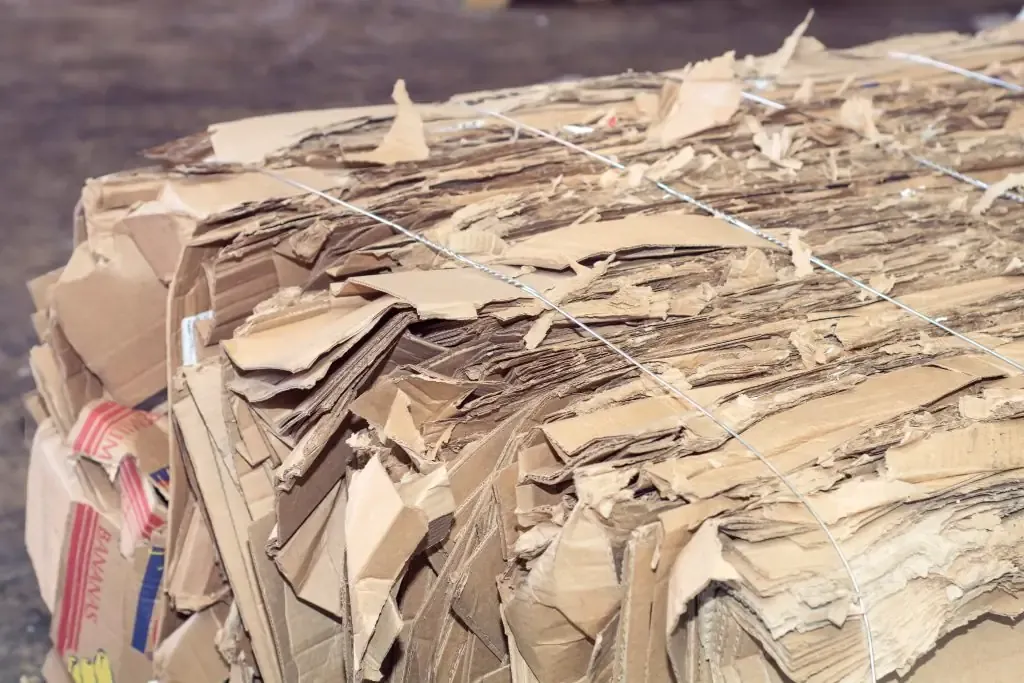
Both machines can produce sellable bales, but buyers pay for density and consistency. A 72-inch high-density vertical makes mill-size bales for a single-stream operation; a horizontal makes them all day with tighter consistency. Bale weight drives the revenue math.
5. What is the budget, and is reconditioned on the table?
A refurbished vertical from our shop lands well under the cost of a new one and carries the same wire, training, and service support. Horizontals are a capital project. We quote new and reconditioned side by side so you see both numbers before deciding.
What we usually recommend
Most stores, restaurants, hotels, and mid-size warehouses in the Mid-South should start with a 60-inch or 72-inch vertical baler and grow into a horizontal only if volume forces it. Distribution centers, recyclers, and plants baling continuously should skip straight to a horizontal sized with headroom. Either way, the machine is only half the purchase: baling wire on a delivery schedule, operator training, and a service company that answers the phone are the rest.
Get expert help from Norton Equipment
We sell, install, and service vertical, horizontal, and two-ram balers of every major brand, with our own delivery and rigging crew and a fabrication shop for the hoppers and feed works horizontals need. Call (662) 838-7900 or request a quote and we will size it from your real volume.