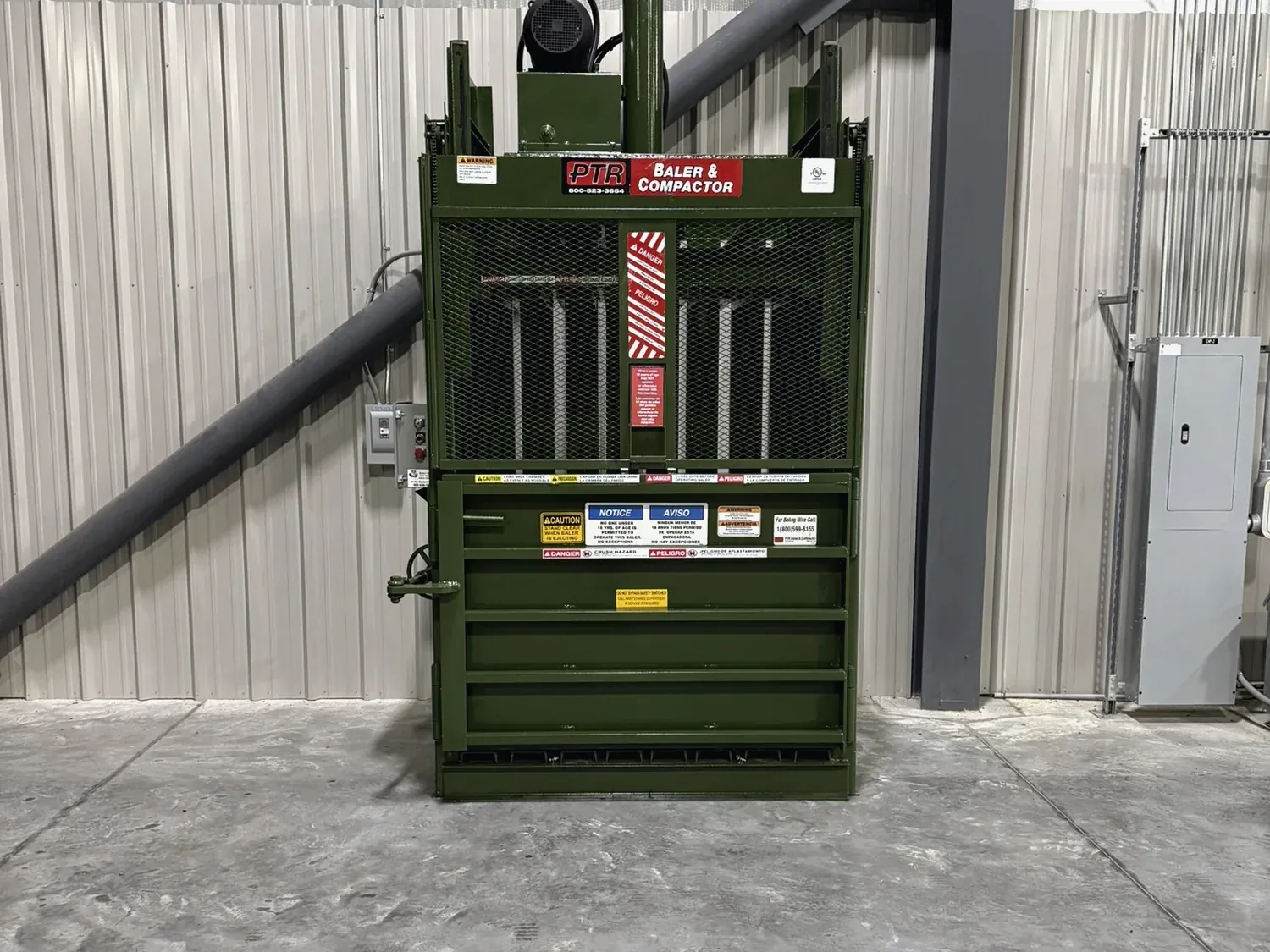
A used baler is generally sold in its existing condition; a refurbished baler has received inspection and repair or rebuilding. Compare documented work, structural condition, hydraulics, controls, safeguards, and installed cost. Ask about the exact warranty and service support before choosing either option.
In this guide
A quality used or refurbished baler can be an excellent investment. It can also become an expensive piece of equipment sitting idle in your facility if you buy the wrong machine from the wrong source. The most important thing to understand before shopping is that used and refurbished should not mean the same thing. A used baler may be inspected and sold according to its existing condition. A properly refurbished baler should have gone through a deeper evaluation, with worn, damaged, or failed components addressed as necessary before the machine returns to service. That difference matters. A machine can look clean, freshly painted, and ready to work while still having serious problems in the hydraulic system, controls, cylinder, frame, ram, safety circuit, or tying system. Before you buy, you need to know what you are actually getting.
Used vs. Refurbished Baler at a Glance
| Used Baler | Refurbished Baler |
|---|---|
| Typically sold in its current condition | Has undergone repair, rebuilding, or component replacement |
| May have a lower initial purchase price | Usually costs more because work has been performed |
| More unknown wear may remain | Major known issues should have been addressed |
| Inspection is especially important | Refurbishment process should be documented |
| Can be a good fit for mechanically capable buyers | Can reduce some near-term repair uncertainty |
| Condition varies widely | Quality depends heavily on who performed the work |
A freshly painted machine is not necessarily a refurbished machine. Paint tells you almost nothing about the condition of the systems that actually make the baler work.
Start With the Application, Not the Price
Before inspecting a used machine, make sure it is even the right machine for your operation. A great deal on the wrong baler is still a bad deal. You need to know:
- What material you plan to bale
- How much material you generate
- Your peak volume
- Whether loading will be manual or automated
- Available floor space
- Electrical availability
- Finished bale requirements
- How bales will be handled
- What your recycler accepts
A mechanically sound baler that is too small, too large, too slow, or incompatible with your waste stream will create problems even if the equipment itself is in excellent condition.
1. Verify Exactly What You Are Buying
Before discussing price, confirm the machine's identity and history. Ask for:
- Manufacturer
- Model
- Serial number
- Approximate age when available
- Previous application
- Material previously processed
- Known service history
- Reason for removal
- How long the machine has been idle
- Whether the machine can be demonstrated under power
The previous application can tell you a great deal. The same model baler used occasionally in a retail stockroom may have experienced a very different life from one operating multiple shifts every day inside a high-volume recycling facility. Age matters. Operating conditions matter too.
2. Inspect the Structural Frame
The frame deserves careful attention because nearly every other system depends on the machine remaining structurally sound. A qualified inspection should look for conditions such as:
- Cracks
- Distortion
- Excessive corrosion
- Poor previous repairs
- Questionable welds
- Worn high-stress areas
- Damage around cylinder mounting points
- Chamber wear
- Evidence of impact
- Signs of repeated overloading or abuse
A leaking hose can often be repaired. Major structural deterioration can completely change the economics of the purchase. Do not let new paint hide an old problem.
3. Inspect Previous Weld Repairs Carefully
Not every welded repair is a problem. Commercial equipment is repaired throughout its service life. The important question is whether the repair was performed correctly and whether the damage that caused the repair indicates a larger structural issue. Look for:
- Uneven or questionable welds
- Repairs in high-stress areas
- Cracking around previous repairs
- Reinforcement that appears improvised
- Distortion around repaired sections
If you are not qualified to evaluate structural repairs, have someone experienced with industrial balers inspect the machine.
4. Inspect the Hydraulic System
The hydraulic system produces the force that allows the baler to compress material. Its condition is extremely important. A professional inspection may evaluate:
- Cylinders
- Cylinder rods
- Seals
- Hoses
- Fittings
- Pumps
- Valves
- Reservoir
- Hydraulic fluid
- Filtration
- Operating pressure
- Operating temperature
- Evidence of contamination
- Evidence of active or previous leaks
A hydraulic issue does not automatically make a used baler a bad purchase. The important questions are: What is wrong? What will it cost to repair? How soon is that repair likely to be needed? Has that cost already been reflected in the purchase price?
5. Pay Close Attention to the Hydraulic Cylinder
The cylinder performs critical work on every cycle. Look for signs such as:
- Visible leakage
- Damaged cylinder rods
- Scoring
- Corrosion
- Uneven movement
- Previous repair work
- Abnormal noise
- Evidence of seal failure
Cylinder repair or replacement can become a significant expense depending on the machine. Its condition should not be overlooked.
6. Inspect the Ram and Bale Chamber
The ram and chamber experience repeated mechanical loads throughout the life of the baler. Inspection may reveal:
- Excessive wear
- Misalignment
- Damaged surfaces
- Worn guides
- Chamber deterioration
- Cracks
- Excessive clearances
- Previous structural repair
- Unusual wear patterns
These issues can affect:
- Bale quality
- Reliability
- Cycle performance
- Tying
- Equipment life
- Future repair costs
Uneven wear can also provide clues about alignment or previous operating problems.
7. Evaluate the Electrical Controls
A used machine can be mechanically strong while having an outdated or unreliable control system. Qualified personnel should evaluate areas such as:
- Control panel condition
- Wiring
- Motor controls
- Contactors
- Relays
- Switches
- Sensors
- PLC or controller where equipped
- Operator controls
- Warning devices
- Emergency stops
- Safety interlocks
Older controls deserve special attention. Ask:
- Are replacement components still available?
- Has the machine been modified?
- Is the control system supported?
- Have obsolete components already been upgraded?
- Are electrical drawings available?
A cheap baler can become expensive quickly if a failed control component is difficult to source.
8. Never Treat Safety Systems as Optional
A commercial baler uses powerful moving components. Safety systems are part of the machine, not optional accessories. A qualified inspection should verify model-specific safeguards such as:
- Gates
- Guards
- Door interlocks
- Emergency stops
- Safety switches
- Warning devices
- Control functions
- Lockout provisions
Never buy a machine assuming employees can work around a missing guard or failed safety switch. If a safety system does not function correctly, it needs to be corrected before the machine enters normal service.
9. Inspect the Tying System
The machine does not finish the job simply because it compresses material. The bale must also be tied correctly. Inspect the tying system for:
- Wire routing
- Wire guides
- Wear
- Damage
- Cutters
- Tie mechanism condition
- Automatic tying components where equipped
- Manual tying access
- Alignment
For automatic horizontal balers, the tying system can be one of the most important components affecting productivity. A machine that compresses material reliably but repeatedly fails to tie bales can still create major downtime.
10. Check Doors, Gates, Hinges, and Latches
These components may appear simple, but they experience repeated use. Inspect:
- Hinges
- Latches
- Pins
- Door alignment
- Gate movement
- Wear
- Cracking
- Interlock operation
- Signs of forced operation
A door that requires employees to fight with it every cycle is not a minor inconvenience. It can point to wear, alignment, or structural issues.
11. Run the Machine Under Realistic Conditions When Possible
Watching a baler power on is not the same as watching it work. When practical and safe, a qualified evaluation should observe the machine operating through normal functions. Pay attention to:
- Startup
- Ram travel
- Cycle consistency
- Hydraulic leaks
- Vibration
- Unusual noise
- Control response
- Tying
- Bale formation
- Faults
- Performance after repeated cycles
Some issues become visible only after the machine has been operating for a period of time. A five-second demonstration proves very little.
12. Ask What "Refurbished" Actually Means
This may be the most important question when purchasing refurbished equipment. Ask the seller: What exactly did you refurbish? A meaningful answer should be specific. Depending on the condition of the machine, refurbishment work may involve:
- Structural repair
- Cylinder work
- Hydraulic components
- Hoses
- Fittings
- Pumps
- Valves
- Electrical controls
- Wiring
- Ram wear surfaces
- Guides
- Tying components
- Guards
- Safety devices
- Paint
- Operational testing
Not every refurbished machine needs every component replaced. That would not make financial sense. What matters is whether the machine received a thorough evaluation and whether required work was completed correctly.
13. Ask for Documentation
When possible, request documentation showing what was done. Useful records may include:
- Inspection report
- Parts replaced
- Hydraulic work performed
- Electrical work performed
- Cylinder repair
- Structural work
- Photographs
- Test results
- Service history
- Warranty information if applicable
Documentation provides far more confidence than the word "refurbished" in a sales listing.
14. Ask Who Performed the Refurbishment
There is an important difference between buying from:
- An auction
- A broker
- A reseller
- A company with a service department
- A company with an actual fabrication and rebuild operation
If the machine was rebuilt, ask:
- Who performed the work?
- Can they explain what was repaired?
- Can they service the machine after the sale?
- Can they source parts?
- Do they know the manufacturer?
- Can they fabricate components if necessary?
- Can they install the machine?
- Can they support it after installation?
Buying the baler is only the beginning of the relationship you will have with that equipment.
15. Investigate Parts Availability
A low-cost machine can become a very expensive machine if critical parts are obsolete. Before buying, investigate availability for:
- Hydraulic components
- Electrical components
- Sensors
- Safety switches
- Controllers
- Tying system parts
- Wear components
- Manufacturer-specific parts
Some older machines use common industrial components that remain easy to support. Others may contain systems that are increasingly difficult to maintain. Know which situation you are buying into.
16. Calculate the Installed Cost, Not Just the Purchase Price
Imagine two machines.
Machine A
Purchase price is significantly lower. But it still needs:
- Freight
- Rigging
- Hydraulic repairs
- Electrical repairs
- New tying components
- Installation
- Control work
- Structural repair
Machine B
Purchase price is higher. But it has already been inspected, repaired, tested, and prepared for your application. Machine A may still be the better deal. But you cannot know until you compare the complete cost. The actual investment can include:
- Equipment purchase
- Freight
- Rigging
- Installation
- Electrical work
- Concrete or site preparation
- Repairs
- Replacement components
- Startup
- Training
- Initial service
- Baling wire
- Downtime
Always compare the cost of putting the machine into productive service.
17. Consider Downtime Risk
This matters more for some businesses than others. If the baler supports a high-volume distribution center operating multiple shifts, a breakdown can quickly create:
- Cardboard accumulation
- Labor problems
- Dock congestion
- Emergency hauling
- Production issues
- Safety concerns
In that environment, paying more for a better-condition machine may be financially smart. A lower-volume business may be able to accept more equipment risk. Your tolerance for downtime should influence the purchase.
When Buying Used Makes Sense
A used baler may be a strong option when:
- Budget is an important consideration
- The machine has been properly inspected
- Its condition is clearly represented
- Parts remain available
- You understand the repair risk
- You have access to service support
- The equipment is correctly sized for your application
Used does not automatically mean poor quality. Some used machines have years of productive service remaining. The key is knowing what you are buying.
When Refurbished Makes Sense
A refurbished baler may be attractive when:
- Reliability is important
- You want a lower capital investment than comparable new equipment
- You want greater confidence in condition
- The rebuild was performed by a qualified company
- You want support after installation
- The machine is correctly matched to your operation
The value of refurbished equipment depends heavily on the quality of the refurbishment.
When New May Still Be the Better Choice
Used or refurbished is not automatically the best financial decision. New equipment may make more sense when:
- Downtime is extremely expensive
- You require a specific configuration
- Your operation needs modern automation
- Production volume is very high
- Warranty coverage is a priority
- The machine will operate for many hours each day
- You expect major future growth
- Used equipment cannot meet the application correctly
A good equipment supplier should be willing to tell you when new makes more sense.
Used Baler Inspection Checklist
Before purchasing, evaluate:
Machine Identification
- Manufacturer confirmed
- Model confirmed
- Serial number confirmed
- Previous application known
- Service history reviewed when available
Structure
- Frame inspected
- Chamber inspected
- Previous weld repairs inspected
- No unexplained structural damage
Hydraulics
- Cylinder inspected
- Hoses inspected
- Fittings inspected
- Pump condition evaluated
- Valves evaluated
- Leaks checked
- Fluid condition considered
Electrical
- Control panel evaluated
- Wiring evaluated
- Motors evaluated
- Sensors evaluated
- Parts availability checked
Safety
- Guards present
- Interlocks function correctly
- Emergency stops function
- Gates operate correctly
- Safety devices have not been bypassed
Tying
- Wire system inspected
- Guides inspected
- Tier inspected where applicable
- Cutters inspected
- Bale tying tested if possible
Operation
- Machine demonstrated
- Cycle observed
- Unusual noises checked
- Leaks checked during operation
- Bale quality observed
- Repeated cycles tested where possible
Norton Equipment's Approach to Used and Refurbished Equipment
Norton Equipment Company has worked with commercial balers, compactors, and recycling equipment since 1997. Our capabilities extend beyond simply buying and reselling equipment. Norton works with equipment service, repair, installation, fabrication, rebuilding, and refurbishment. That matters when evaluating used machinery. The structure matters. The hydraulics matter. The controls matter. The safety systems matter. The application matters. And the company's ability to support the equipment after the sale matters. If you are considering a used or refurbished commercial baler, contact Norton Equipment Company before you buy. Our team can help evaluate the equipment and determine whether it actually fits your operation.
Used and refurbished balers from Norton
Norton sells used balers as-is without a warranty. Refurbished balers carry a shop warranty; ask for the terms and scope in your written quote. Availability and turnaround depend on the equipment and work required. See used balers and refurbished balers for the two options.
