Stationary Compactors
High-volume dry-waste compaction for warehouses, DCs, retail, and manufacturing.
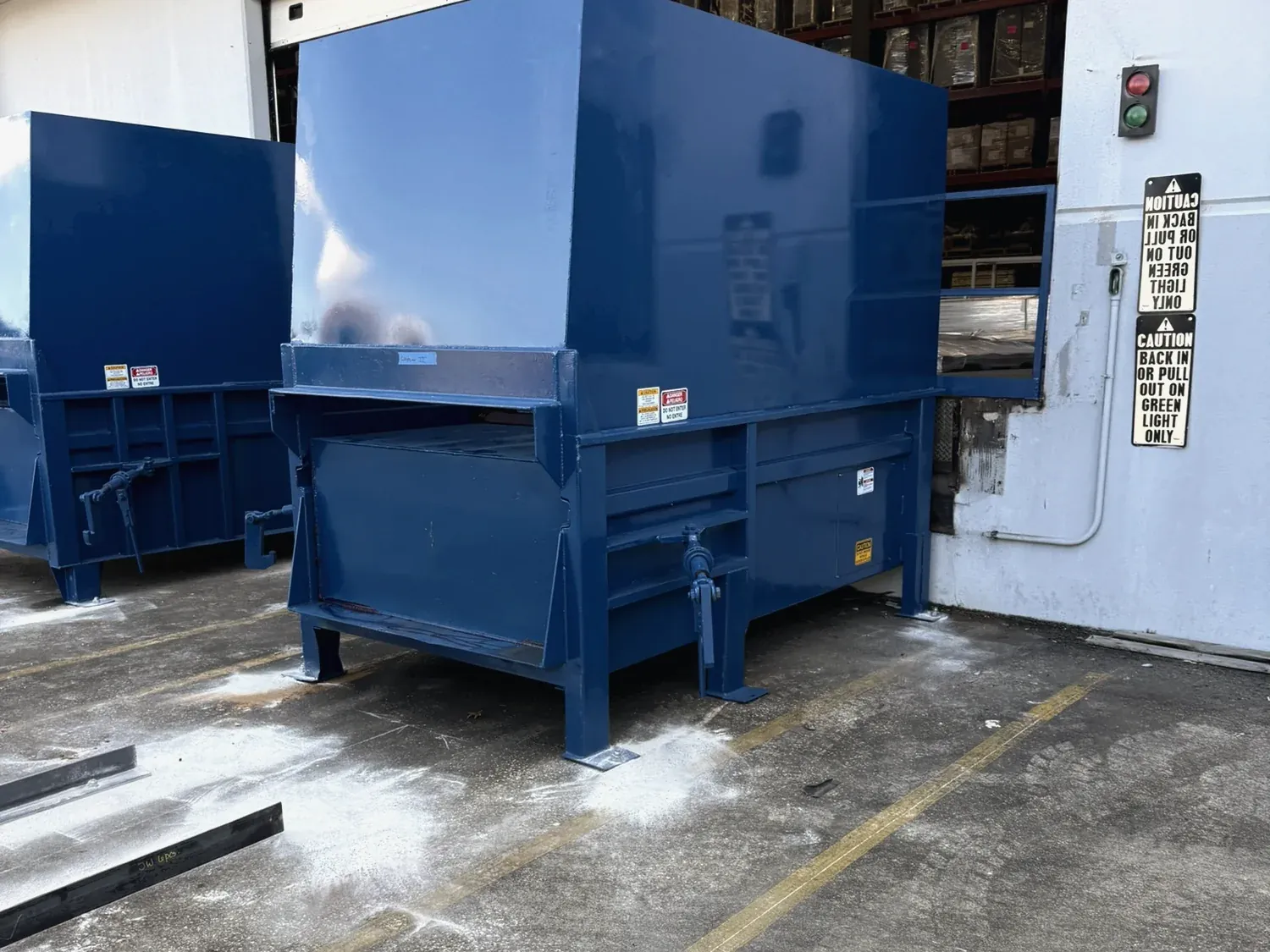
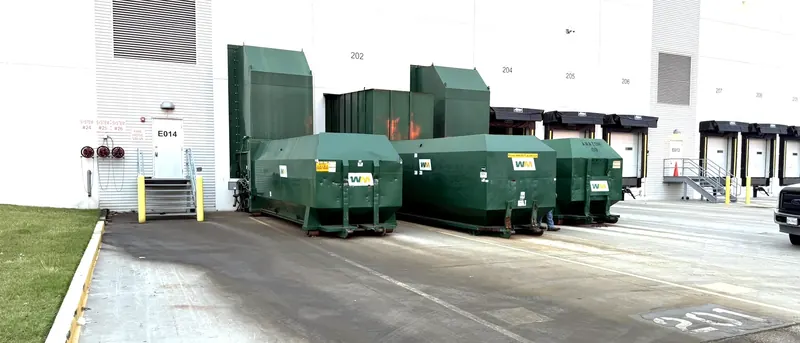
A stationary compactor is the workhorse of dry waste. The compactor stays anchored to your pad and rams waste into a detachable receiver container; when the container is full, the hauler swaps it and the compactor keeps working. Downtime is basically zero, and cost per hauled yard is as low as it gets.
For the Memphis metro (one of the largest warehouse and distribution markets in America) this is the machine behind the building. Cardboard, shrink wrap, packaging, floor sweepings, break-room trash: a properly sized stationary unit compacts roughly four loose yards into one.
- Distribution centers & warehouses
- Manufacturing plants
- Big-box & strip retail
- Printers & converters
- Schools & institutions
- Transfer & logistics operations
What you get with Norton.
Maximum payloads
Compaction ratios of roughly 3:1 to 4:1 on typical dry waste mean your hauler moves full, heavy containers, not air. Fewer pulls, smaller bill.
Continuous operation
Because the receiver container detaches, the compactor never leaves your dock. Swap the box and keep feeding.
Feed options
Ground feed, dock feed, through-wall chute, or hopper with cart tipper. We configure the feed setup that fits your building.
Ratings for every duty
From 2-yard charge chambers for retail to heavy-gauge industrial units for round-the-clock DCs. We match cycle force and chamber size to your waste.
Machine down? Sizing question? Talk to a real tech, not a call center.
Frequently Asked Questions
Can a stationary compactor handle any wet waste?
What power do I need?
Do stationary compactors work with any hauler?
Read before you buy.
Commercial Trash Compactor Installation Guide: Site Prep, Electrical, Concrete, Clearance, and Hauler Access
Plan a commercial compactor installation around the exact machine and its manufacturer-approved drawings. Confirm the waste stream, concrete foundation, electrical service, loading arrangement, service clearance, drainage, and hauler access before delivery. Coordinate the supplier, hauler, installers, and qualified trades before site work begins.
Read Article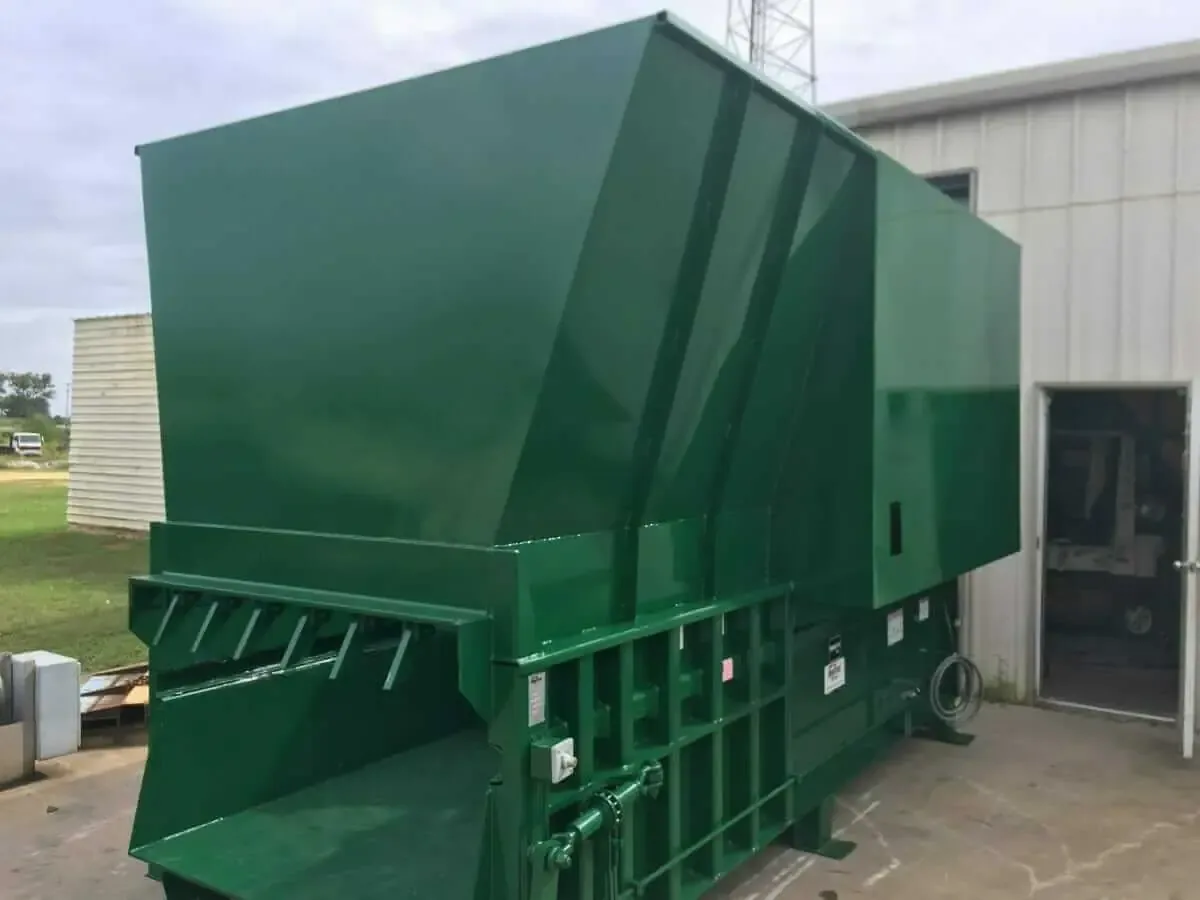
Self-Contained vs. Stationary Compactors: Which One Do You Need?
The single most common compactor question, answered properly: how the two machines differ, why wet waste settles the argument, and what each costs to run: industry by industry.
Read Article
How a Trash Compactor Cuts Your Hauling Bill (The Business Case)
For the person who signs the checks: where hauling money actually goes, the three ways compaction claws it back, and a worked example with real Mid-South numbers.
Read ArticleAlso worth a look.
Self-Contained
Leak-tight compaction for wet waste: grocery, food service, hospitals.
View DetailsPre-Crusher
Crushes pallets, drums, crates, and furniture before compaction.
View DetailsAuger
Screw-driven compaction for high-volume cardboard and wood waste.
View Details