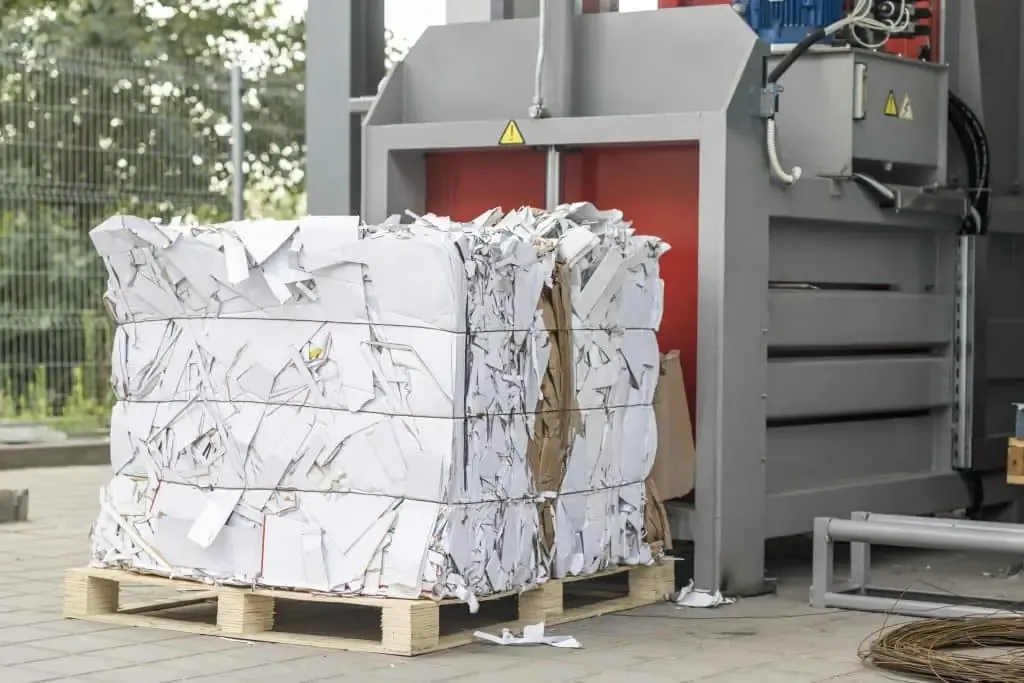
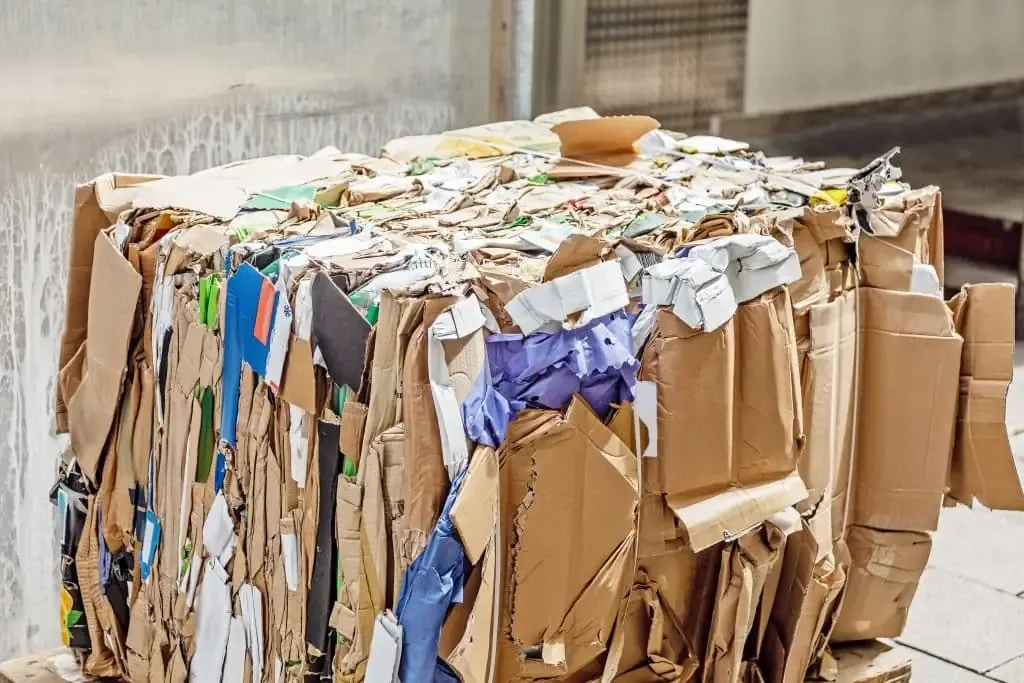
A cardboard bale weighs anywhere from about 100 pounds out of a small vertical baler to 2,000 pounds or more out of a two-ram. A standard 60 inch vertical baler makes bales of roughly 600 to 1,000 pounds; a 72 inch high-density vertical makes mill-size bales of 750 to 1,100 pounds; auto-tie horizontals make 1,000 to 1,800 pound bales. Density, moisture, and the type of cardboard move the number.
In this guide
Why bale weight matters
If you handle, transport, or sell cardboard, bale weight is the number everything else runs on. It decides which forklift moves the bale, how many bales fill a trailer, whether the recycler treats your material as mill-size, and what the bale is worth. It also decides which baler you should buy, because the chamber size sets the bale. This guide gives typical weights by machine, explains what moves them, answers the related question of how much the baler itself weighs, and puts a current value on the bale.
Cardboard bale weight by baler size
These are typical ranges for dry, well-compressed old corrugated containers (OCC). Your bales will land inside them if the machine is working to specification and the operator fills the chamber before tying.
| Baler | Typical bale dimensions | Typical bale weight | Who makes them |
|---|---|---|---|
| Small vertical, 30 inch chamber | About 30 by 24 by 30 inches | About 100 to 300 pounds | Convenience stores, small retail, offices |
| Mid-size vertical, 42 to 48 inch chamber | About 42 to 48 inches wide by 30 by 40 inches | About 300 to 600 pounds | Retail, restaurants, smaller warehouses |
| Standard vertical, 60 inch chamber | About 60 by 30 by 48 inches | About 600 to 1,000 pounds | Grocery, big-box retail, warehouses, distribution back rooms |
| High-density vertical, 72 inch chamber | About 72 by 30 by 48 inches | About 750 to 1,100 pounds, mill-size | High-volume retail, warehouses, manufacturers |
| Closed-door horizontal | About 30 by 48 inches by 48 to 60 inches long | About 800 to 1,200 pounds | Operations that outgrew a vertical |
| Open-end auto-tie horizontal | About 30 by 44 to 48 inches by 60 inches long | About 1,000 to 1,800 pounds | Distribution centers, recyclers, printers |
| Two-ram | About 30 by 48 by 60 inches or larger | About 1,200 to 2,000 pounds or more | Recycling processors, multi-material plants |
The baler sizing guide turns your weekly cardboard volume into a machine class, and the horizontal baler guide covers the three horizontal designs in the lower half of the table.
What makes one bale heavier than another
- Chamber size. The biggest factor. A 72 inch chamber holds more cardboard than a 60 inch chamber at the same density.
- Compression force. High-density balers use more hydraulic force to pack more material into the same chamber. That is the difference between a standard 60 inch bale and a high-density one, and between a vertical bale and a horizontal one.
- How full the chamber is when the operator ties. Tying early makes light bales. Most verticals have a full-bale indicator; use it.
- Moisture. Wet cardboard weighs more and is worth less. Recyclers deduct for moisture and may reject soaked bales. Store cardboard and bales under cover.
- Type of cardboard. Heavy double-wall shipping cartons make denser bales than light single-wall retail packaging. Mixed paper and chipboard in the bale lower both weight and grade.
- Wire. Under-tied bales expand after ejection and lose density. Use the number and gauge of ties the machine manual calls for; the baling wire page covers the choices.
How much does a cardboard baler weigh?
The machine, not the bale. This matters for the slab, the delivery truck, and the rigging plan.
| Baler | Approximate machine weight |
|---|---|
| Small vertical, 30 inch | About 1,500 to 2,500 pounds |
| Standard vertical, 60 inch | About 3,500 to 5,500 pounds |
| High-density vertical, 72 inch | About 5,500 to 8,000 pounds |
| Closed-door horizontal | About 10,000 to 20,000 pounds |
| Open-end auto-tie horizontal | About 15,000 to 40,000 pounds depending on size |
| Two-ram | About 40,000 pounds to well over 100,000 pounds |
These are planning figures; the manufacturer’s specification sheet for the exact model governs. Any vertical baler is a forklift or crane set, not a pallet jack job, and horizontal machines need a slab rated for the load. Norton’s logistics crew handles delivery and placement for the machines we sell and relocates machines we did not.
What a bale of cardboard is worth in 2026
Recyclers and mills buy OCC by the ton, so a 1,000 pound bale is half a ton of commodity. Published national averages for baled OCC moved through a wide range during 2026, roughly between $60 and $100 a ton depending on the month and region, after several years of swings in both directions. Two cautions when you turn that into a number for your bales:
- The published price is a mill price for truckload quantities of mill-size bales. A local recycler picking up a handful of bales from a single store pays less, sometimes nothing in exchange for free pickup. Ask for a written price and pickup schedule.
- Density and cleanliness decide the grade. Dry, well-tied, cardboard-only bales from a high-density vertical or a horizontal qualify for the best treatment. Light, wet, or contaminated bales do not.
Even at a low pickup rate, the bale is doing its main job: cardboard that used to fill a dumpster you paid to have pulled is now leaving for free or for money. The baler cost guide works through a payback example built on bales per week, and the waste stream consultation runs it from your own invoices.
Handling bales safely
A 60 inch bale weighs more than most people expect and comes out of the chamber by tipping forward. Eject with the ram up and the machine stopped, stand clear of the tip path, and move bales only with a forklift rated for the weight and operated by a certified driver. Stack within the facility’s limit and keep bale storage out of aisles and away from exits. The baler safety and training guide covers ejection, handling, and the rest of operator training.
Choosing a baler around the bale
Start from the bale your recycler wants and your forklift can move, then work back to the machine. A store producing a few bales a week fits a 60 inch vertical. Serious volume or a recycler paying mill prices points to a 72 inch high-density vertical. When baling becomes a full shift, the horizontal conversation starts. Norton sells and services all of them, new, refurbished, and used, and delivers the wire. Call (662) 838-7900 with your weekly volume and we will match the machine to the bale.