Choose a cardboard baler using actual material volume, peak generation rate, available operator time, floor space, and the bale your recycler accepts. Check loading, ejection, storage, power, and handling requirements for the exact model. Building size or a universal tonnage threshold cannot determine the right machine.
In this guide
Choosing the right cardboard baler is not as simple as matching your building size to a machine size. A 200,000-square-foot warehouse can need a completely different baler than another warehouse of the same size. What matters is the waste stream. The right commercial baler depends on:
- How much cardboard you generate
- How quickly it is generated
- Your busiest production period
- Available floor space
- How material reaches the baler
- Employee labor
- Finished bale requirements
- Material handling equipment
- Your recycler
- Future growth
The most important rule is this: Size the baler around the real operation, not a guess about how much cardboard you produce.
Step 1: Identify Exactly What You Plan to Bale
Start with material. Are you processing:
- Corrugated cardboard
- Paper
- Plastic film
- Rigid plastics
- Manufacturing scrap
- More than one recyclable stream
Different materials behave differently under compression. Do not assume a machine that works well for cardboard is automatically the correct machine for every other material your facility generates. Identify the material first.
Step 2: Measure Your Actual Cardboard Volume
"We fill the dumpster constantly" is useful as a warning sign, but it is not enough information to size equipment. Track your cardboard generation. You can record:
- Number of containers or carts filled
- Approximate loose volume
- Current dumpster pulls
- Weight data when available
- Number of pallets or loads of incoming boxes
- Volume by shift
- Volume by day
- Seasonal changes
If possible, measure for long enough to capture normal operations and at least one busy period. The better your data, the better your equipment decision.
Step 3: Size for Peak Demand, Not Just the Average
Average volume can hide the actual problem. Imagine a business with manageable cardboard volume most of the week but a major shipping surge every Friday. A machine selected strictly around the weekly average may fall behind during the period when the business needs it most. Ask:
- What is our busiest day?
- What is our busiest shift?
- Does volume spike seasonally?
- Are we adding production?
- Are we adding locations or customers?
- Will ecommerce or shipping volume increase?
- Are we currently growing?
A baler should not become a bottleneck immediately after installation. At the same time, buying far more machine than the operation could realistically use can waste capital. The goal is reasonable capacity with room for realistic growth.
Step 4: Decide Whether Your Workflow Fits a Vertical or Horizontal Baler
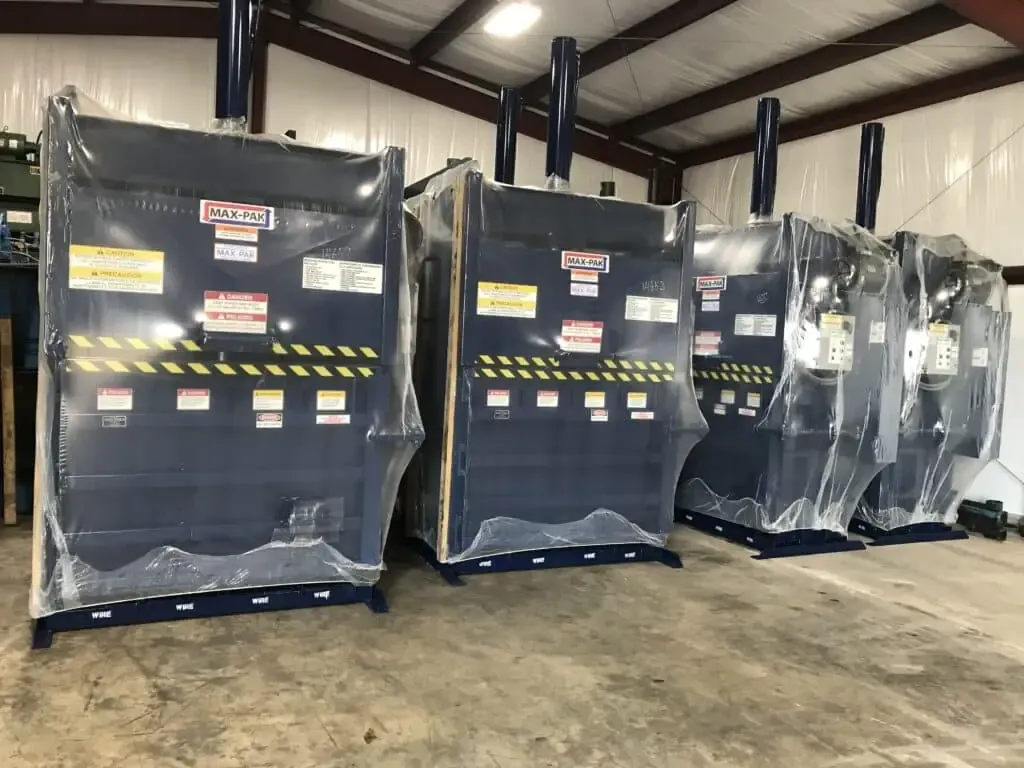
Vertical baler
A vertical baler can be an excellent fit when:
- Volume is manageable
- Manual loading is practical
- Floor space matters
- Material arrives in batches
- Employees can periodically operate the baler
- Conveyor integration is unnecessary
Horizontal baler
A horizontal baler becomes more attractive when:
- Material is generated continuously
- Volume is high
- Manual handling has become expensive
- Conveyor feeding makes sense
- Multiple shifts rely on the system
- Higher throughput is necessary
- A more automated workflow would provide meaningful value
Do not move to a horizontal baler simply because it sounds more industrial. Do not stay with a vertical baler simply because the purchase price is lower. Choose around the workflow.
Step 5: Look at Floor Space Correctly
Measure more than the machine. A safe, usable baler area may require room for:
- Loading
- Operator access
- Door movement
- Bale ejection
- Forklift access
- Bale storage
- Baling wire
- Electrical equipment
- Service access
- Required clearances
Measure doorways and travel paths too. A baler that fits its final location still has to get there.
Step 6: Determine the Finished Bale You Need
The output matters almost as much as the input. Your recycler may have preferences for:
- Bale size
- Bale weight
- Material quality
- Contamination levels
- Tying method
- Storage
- Pickup quantity
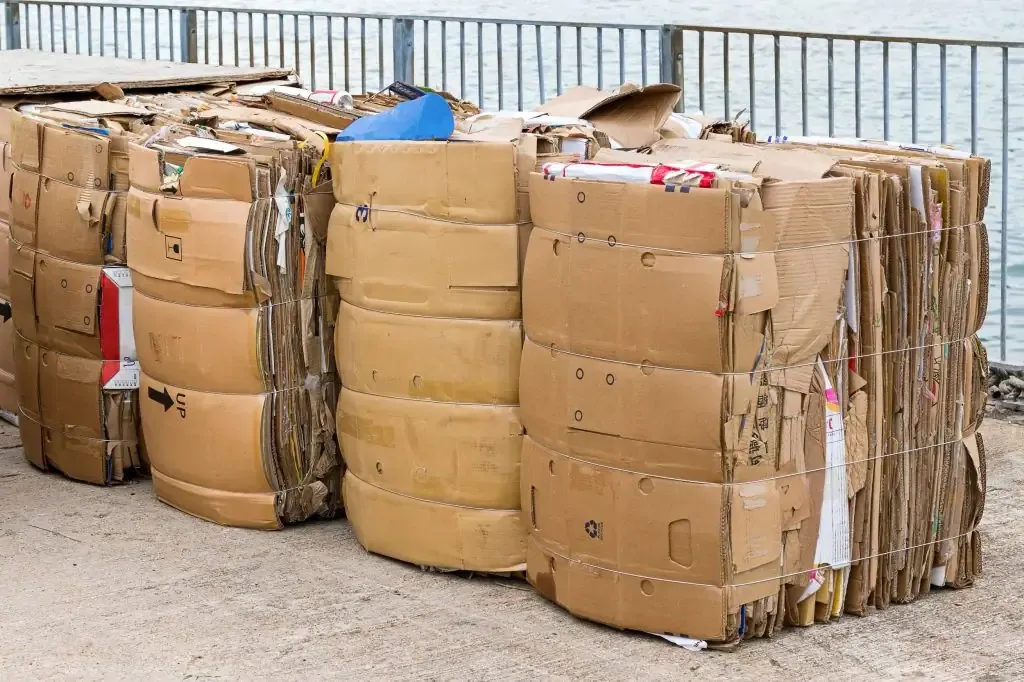
Talk with the company receiving your cardboard. A heavier bale is not automatically better if your forklift cannot safely handle it. A smaller bale is not automatically easier if it creates excessive handling and inefficient transportation. The ideal bale fits both your operation and your downstream recycling process.
Step 7: Make Sure You Can Handle the Bale Safely
Before selecting the machine, know how the finished bale will leave the baler. Consider:
- Forklift capacity
- Pallet jack compatibility where applicable
- Floor condition
- Door clearance
- Trailer or dock height
- Bale storage
- Employee training
- Traffic around the baler
Finished bales can be extremely heavy. Material handling should be part of the original baler plan, not an afterthought.
Step 8: Calculate Employee Touches
Watch how cardboard moves through the building. How many times does an employee touch the same box? Does somebody:
- Empty the box?
- Break it down?
- Carry it to a staging area?
- Move the pile later?
- Carry it to the baler?
- Load the machine?
Every unnecessary movement consumes labor. For smaller operations, this may not justify automation. For high-volume facilities, it can become one of the strongest arguments for changing the system.
Step 9: Consider the Baler's Location
The best baler can perform poorly if installed in the wrong place. Ideally, the equipment should support the natural movement of material. Ask:
- Where is cardboard created?
- How far are employees carrying it?
- Can carts reach the baler?
- Can forklifts move around it safely?
- Will material obstruct aisles?
- Can finished bales leave the area efficiently?
- Can technicians reach the machine for service?
Equipment location can influence labor every day for years. That makes location an operating decision, not just an installation decision.
Step 10: Understand Your Electrical and Facility Requirements
Different balers have different requirements. Before purchasing, verify the requirements for the exact make and model under consideration. This may involve:
- Voltage
- Phase
- Amperage
- Disconnect requirements
- Floor or foundation requirements
- Indoor or outdoor suitability
- Environmental conditions
- Required clearances
Do not design infrastructure around generic internet specifications. Use the approved manufacturer documentation for the exact machine and qualified installers where required.
Common Baler Sizes and Applications
Instead of thinking only in dimensions, it is more useful to think in application categories.
Compact or smaller vertical balers
Potential fit:
- Smaller retailers
- Businesses with limited cardboard volume
- Facilities where space is extremely limited
Full-size vertical balers
Potential fit:
- Larger retailers
- Grocery operations
- Warehouses
- Commercial facilities
- Operations producing regular cardboard volume
Horizontal balers
Potential fit:
- Distribution centers
- Manufacturing
- Packaging operations
- Large warehouses
- Higher-volume recycling applications
High-capacity or specialized systems
Potential fit:
- Recycling facilities
- Very high-volume operations
- Multi-material applications
- Automated processing lines
These are application categories, not universal sizing rules. Machine selection should always be based on the individual facility.
The Biggest Mistake: Buying Based Only on Price
Suppose one baler costs less but causes employees to spend hours every week moving and processing material. Suppose another machine costs more but eliminates a material bottleneck. Which one is really cheaper? The complete cost can include:
- Purchase price
- Installation
- Electrical work
- Labor
- Maintenance
- Downtime
- Baling wire
- Material handling
- Hauling
- Storage
- Equipment life
Equipment decisions should be made around total operating value.
A sizing example: average volume can hide the bottleneck
Illustrative example, not a Norton customer result: a warehouse records 500 pounds of cardboard on a normal day and 1,500 pounds during a four-hour receiving peak. That peak represents 375 pounds per hour before allowing for loading, tying, ejection, breaks, or interruptions. A supplier needs that peak rate, available operator time, and actual material to evaluate usable throughput. It is not a recommendation for a particular model.
Compare the full workflow in our horizontal baler guide, which puts vertical and horizontal side by side. Then verify finished bale weight, handling capacity, and recycler acceptance. Ask Norton for an equipment evaluation.
Bring these details to your sizing evaluation
Use the printable baler sizing worksheet to record material, average and peak volume, available floor area, clearances, power, labor, bale handling, and recycler requirements. Do not guess missing electrical or foundation specifications; have them confirmed for the selected machine.
A Simple Baler Sizing Checklist
Before requesting a quote, gather this information:
Material
- What are you baling?
- Is it clean and dry?
- Are multiple materials involved?
Volume
- How much do you generate?
- What is peak volume?
- Are there seasonal surges?
Facility
- Available floor space?
- Ceiling height?
- Door sizes?
- Indoor or outdoor location?
Workflow
- Manual or conveyor loading?
- One shift or multiple shifts?
- How far does material travel?
Finished Bale
- Desired bale characteristics?
- How will it be moved?
- Where will it be stored?
Recycler
- What will they accept?
- What do they prefer?
- How often will they collect?
Growth
- What will the operation look like in three to five years?
If you can answer those questions, an experienced equipment company can make a much more informed recommendation.
Let Norton Help Size the Baler Around Your Operation
Norton Equipment Company has worked with commercial balers and recycling equipment since 1997. Rather than choosing a baler from a photograph or a specification sheet, our team can look at the material, volume, workflow, facility, and downstream requirements that actually determine whether a machine will work. Norton sells and services vertical, horizontal, and other baling systems, along with used and refurbished equipment. If you are asking, "What size cardboard baler do I need?" contact Norton Equipment Company and let us evaluate the application before you buy.